Monday, 19 October 2009

The Secret You: Horizon BBC2


Horizon: THE SECRET YOU

BBC2 Tuesday 20 October 2009 9pm

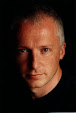
With the help of a hammer wielding scientist, Jennifer Aniston and a general anaesthetic Prof Marcus de Sautoy leaves the certainty of numbers behind and goes in search of answers to one of science’s greatest mysteries: how do we know who we are? It’s a simple question, but one science finds difficult to answer. The feelings and thoughts that make us ‘us’ and make us self aware are easy to experience. But the brain processes that give rise to them are difficult to explain and understanding them is one of the great challenges faced by scientists.

To find out what progress they are making Marcus becomes a human guinea-pig in a series of mind probing experiments. He begins by asking when our self awareness emerges and witnesses a cunning test that convincingly reveals a child’s sense of self before they are even capable of talking about what they are feeling. The experiment begs a question: are we alone in the world in being aware of ourselves? He meets Professor Gordon Gallup, a pioneer of animal psychology to find out.

But to find out how we become self aware, Marcus needs to delve into the inner machinations of the human brain. He starts of by witnessing a brain dissection, but not before he has the sobering experience of holding a human brain in his hands.

Seeing the dissected brain, he wonders when our consciousness disappears and whether answering this question might explain who he is. So Marcus volunteers for a cutting edge medical experiment that will rob him of his sense of self. At the University of Cambridge Wolfson Brain Imaging Centre he undergoes anaesthesia while having his brain scanned. He begins to home in on the areas of the brain that make him who he is.

Marcus’ work as a lab-rat continues in Sweden’s Karolinska Institute. Thanks to an ingenious set of spectacles, Marcus is subjected to a disorientating out of body experience, which serves to illustrate how a sense of self is a trick of the mind.

Marcus’s journey continues to America where he meets Professor Christof Koch of the California Institute of Technolgy. Christof is looking for evidence of consciousness in one of the smallest units of the brain: the individual neuron. He has made some surprising discoveries, helped by celebrities Jennifer Anniston and Halle Berry.

By the time Marcus reaches the University of Wisconsin he is getting closer to an answer to his question. He takes part in an un-nerving experiment featuring transcranial magnetic stimulation – the rapid discharge of electric shocks to a specific region of the brain. Measuring how these shocks travel through the brain’s labyrinthine connections when volunteers are awake and asleep has allowed scientists to demonstrate how the interconnectivity of the brain gives rise to consciousness.

The last experiment Marcus takes part in is perhaps the most perturbing. Keen to find out how taking a choice might reveal the secrets of his inner self, Marcus wants to discover the provenance of his decisions. He takes part in a simple experiment overseen by Professor John-Dylan Haynes at the Bernstein Centre for Computational Neuroscience in Berlin. Marcus is shocked to learn that by studying his unconscious brain Professor Haynes is able to accurately predict Marcus’ decisions and that it is his unconscious brain that presides over his conscious mind.

Marcus concludes the film with a fuller understanding of the state of brain science, but also a sense of how much remains to be revealed. To help the process on its way he commits to one final experiment – one that will take place after his death – and bequeaths his brain to science.

Bonus feature: Hole in the hand

Also check out an article on BBC News Online

Monday, 12 October 2009

The Times Cheltenham Literature Festival


I will be appearing at the Times Cheltenham Literature Festival on Friday 16 October 2009 at 10:00 am at the Town Hall talking about Finding Moonshine.
Book online.

Sunday, 11 October 2009

Simetria


The Spanish edition of Finding Moonshine was published this week by Acantilado.
I was in Spain this week promoting the book. I gave a talk in Madrid at the prestigious Residencia de Estudiantes, home to Dali, Lorca and Bunuel. Other people who have lectured there include Albert Einstein, Paul Valéry, Marie Curie, Igor Stravinsky, John M. Keynes, Alexander Calder, Walter Gropius, Henri Bergson and Le Corbusier.
I also gave a talk in Barcelona at the CosmaCaixa museum. It is a fantastic science museum and I thoroughly recommend it to anyone visiting Barcelona.

Here are some reviews that have appeared in Spain:

El Pais: La Alhambra es un microcosmos de simetrías
Agencia EFE: El científico Marcus Du Sautoy dice que "la simetría es un lenguaje fundamental"

Tuesday, 8 September 2009

Simonyi Lecture


JOIN TIMOTHY GOWERS

For this years

CHARLES SIMONYI LECTURE

at OXFORD PLAYHOUSE


Friday 2 October at 5pm


Rouse Ball Professor of Mathematics at Cambridge University and Fellow of Trinity College, Timothy Gowers, gives this year's Charles Simonyi Lecture, the annual lecture for the public understanding of science at Oxford Playhouse on Friday 2 October.


Gowers will talk about his recent involvement in an experimental attempt to solve a serious mathematical research problem publicly and collaboratively on the internet. He will discuss the problem itself, the difficulties involved, the surprising outcome, and what this suggests for the future of mathematics.


The Simonyi Lectures are a series of annual lectures in Oxford, set up in 1999 by Richard Dawkins, in order to promote the public understanding of science. Now in it’s eleventh year, Marcus du Sautoy follows Richard Dawkins as the new Charles Simonyi Professor.


Tickets for The Charles Simonyi Lecture at Oxford Playhouse are available from the Box Office on 01865 305305 or Oxford Playhouse Website

Friday, 24 July 2009

TED


The subject of TEDGlobal 2009 held in Oxford this week was the Substance of Things Unseen. My talk, given in the section Curious and Curiouser on Wednesday, attempted to illustrate how mathematics is a powerful language to allow us to get access to things unseen. In particular, symmetry is superficially about something visual, something seen. We say a face is symmetrical because we can see that the left side is a mirror of the right side. But how can we "see" that two walls in the Alhambra for example have the same group of symmetries although they visually look very different. The power of mathematics is to be able to "see" an abstract entity underlying the object. It's like the concept of number. Do you ever "see" the number 5? No. You see visual representations of the number 5. This is the power of the language of symmetry that the French revolutionary Evariste Galois developed at the beginning of the 19th century. It allows us to articulate why two objects have the same symmetries although they visually look very diffferent.
It also has the power to prove when we have seen examples of all the symmetries possible. In the Alhambra for example, mathematicians proved that there are only 17 different groups of symmetries possible on a two dimensional wall. There are many more than 17 different wall designs across the palace but they are all examples of one of these 17 symmetry groups. For example, these two walls look very different. But the language of symmetry allows us to explain why the underlying symmetries are exactly the same:


This allows us to explore the symmetries of things seen. But the real power of mathematics is to create symmetries of things unseen. My work concerns creating symmetrical objects that exist beyond our three dimensional visual world. Only with the power of mathematical language can we "see" in 4, 5 even infinite dimensional space.
To celebrate TEDGlobal 2009 I constructed a new symmetrical object that cannot be seen but using mathematical language can be explored and played with. It was won in a competition I ran during my 18 minute talk by another of the TED speakers astronomer Andrea Ghez.

TED blog entry about my talk

Twitter Snapshot: Marcus du Sautoy on symmetry

Groups for Charity If you want your own "unseen" symmetrical object, then a donation through my FirstGiving page to the charity CommonHope will get your name on a new mathematical shape.

Saturday, 4 July 2009

The Complete Sexy Maths


This week saw the last column in the Sexy Maths series in The Times for the time being. The newspaper is downsizing for the summer. It may reappear in a new reincarnation in the autumn. Here is an archive of links to all the columns that appeared during the year, some including the beautiful illustrations of Joe McLaren who will be illustrating my new book The Num8er My5teries.

1 Jul 2009 Oh, it’s such a perfect day. We have discovered 47 perfect numbers — the largest has nearly 26 million digits.

24 June 2009 How to avoid a grudge match. Never mind Arsenal against Spurs. How about NP versus P?

17 June 2009 Arithmetic eases swine flu. Figuring out the rate of contagion can make you feel better

10 June 2009 When it pays to play the odds. Mathematicians, and the laws of probability, can tell you whether to have a flutter, or keep hold of your money.

27 May 2009 A new bicycle reinvents the wheel, with a pentagon and triangle. Guan’s bicycle isn’t the first to exploit these shapes — they have been used by urban planners as manholes.

20 May 2009 A game of 12 pentagons. Why a football match is actually geometry in motion.

13 May 2009 in search of the poetry of Muslim symmetry. Galois’s group theory allowed mathematicians to articulate the theory of symmetry.

6 May 2009 Formula won ... the key to boosting faster travel. How mathematicians can get you to the Grand Prix finishing line — and through an airport — more quickly.

29 April 2009 The lemming theory. There is no mass suicide pact keeping the numbers of lemmings down.

22 April 2009 What's unique about the number 1,729?

15 April 2009 The Fibonacci sequence's prime rate.

8 April 2009 Drawing parallels in geometry. This year's Abel Prize honours some of the most revolutionary contributions to geometry since those of Euclid.

25 March 2009 Go fourth... into another dimension.

18 March 2009 Twists and turns that make a rollercoaster ride.

11 March 2009 A number-munching celebration.

4 March 2009 Ditch the GPS, just follow the colour code.

25 February 2009 Tails of a curious submariner. A US Marine with a lot of time on his hands has noticed that a strange thing happens when you keep tossing a coin.

18 February 2009 How to be a flipping genius. It's possible for me to toss a coin and you, who are somewhere else entirely, to know if I have called honestly.

11 February 2009 Why Palladio's proportions are pleasing on the eye and the ears.

4 February 2009 Why do snowflakes have six arms? Are your children out of school? Keep their grey matter going with a question that baffled generations of scientists.

28 January 2009 It's true, young Muggles. Maths can be magic.

21 January 2009 Rubik's Cube returns.

14 January 2009 Solving wobbly restaurant tables. Wedging beer mats or bits of paper under that annoying table leg is no more. Try the mathematical solution instead.

7 January 2009 Survival of the mathematician.

31 December 2008 How to be a perfect timekeeper.

17 December 2008 Warm up with a few festive candles.

10 December 2008 The symmetry of sneezing. Viruses blight many people's lives in winter but the molecular structure of many are things of mathematical beauty.

26 November 2008 Skills of a chess grandmaster.

19 November 2008To infinity - and beyond

12 November 2008 Get the upper hand at poker.

5 November 2008 Why democracy is an ass.

29 October 2008 Get your teeth into this.

22 October 2008 Why the taxman has your number.

15 October 2008 Sexy maths: a calculating approach to love. Mathematics can help you to maximise your chances of landing the best flat – or the best partner.

8 October 2008 Happy (birthday) coincidences. Why Premier League footballers are likely to have dates of birth in common, and how to win more money on the lottery.

1 October 2008 Primes of passion.

Thursday, 14 May 2009

Finding Moonshine in Paperback


Finding Moonshine appears in paperback today with a fun cover: the back is a mirror image of the front. It also includes a PS section with a portrait of the author by Roger Tagholm; top ten favourite pieces of music; a symmetry tour round the world; plus the article "Einstein Plato ...and you?" written for the Telegraph about the project to use symmetry to raise money for Common Hope, a charity in Guatemala.

Click here to buy the paperback from Amazon